

Versatile Violets
| By Shirley Froelich
(With some insights from Johnny Caryopsis.) |
(Click thumbnail images for more pictures.) |
|
What do the ancient Greeks, Romans, and Napoleon Bonaparte have in common? They all had a great love of violets. And they weren't the only ones. Herbalists used violets extensively from the sixteenth century on to treat many ailments. Butterflies like them too. Violets are the only food plants for the beautiful orange and black Fritillary butterflies. I had quite a few Fritillary butterflies in my garden last summer. Our prairie violets are popular with my customers too. Is it their small size that endears them to gardeners or their adaptability to sun or shade? Maybe it is because their flowers appear in May when many other plants are just starting to show a few green sprouts. Whatever the reason, violets are a great plant for prairie gardens.
|
|||||||||||||||
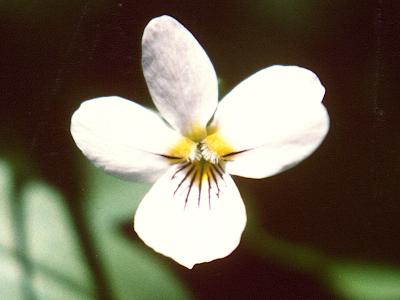
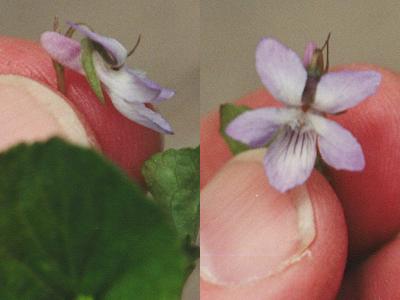
DESCRIPTIONViolets generally begin blooming in May and continue into June. Many species have darker veins on the flowers that act as arrows pointing the way for pollinating insects to a nectar laden spur at the rear of the bottom petal. They have two kinds of flowers: early spring flowers which are showy and cross fertilized, and summer flowers which remain closed and self fertilize (cleistogamous). Seed is produced by both types of flowers in dry, three-part capsules which pop open with some force to scatter the seed. If you wish to collect seed you must do so before the capsules pop. The seed will be ripe when the capsules are pointing up in the air or straight our rather than hanging down.
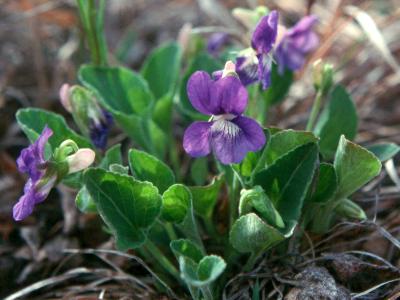
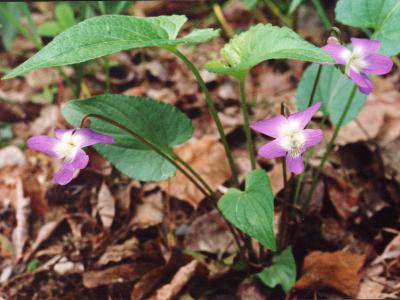
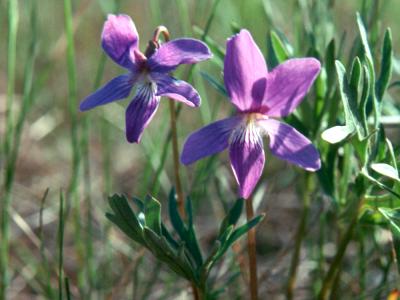
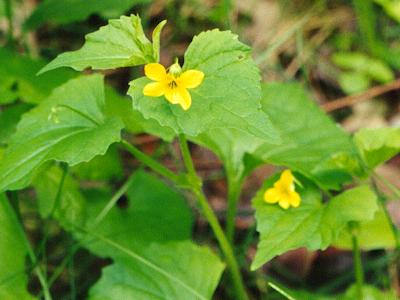
Prairie Originals raises five varieties of violets native to Manitoba. Here's some more about them.
Some other violets to have a look at: Kidney-leaved Violet (Viola renifolia) | Long-spurred Violet (Viola selkirkii)
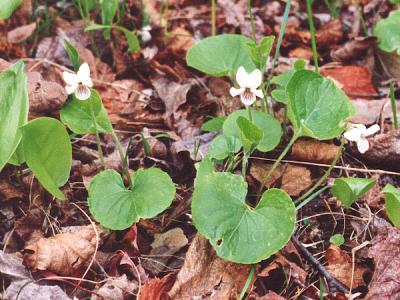
NATIVE HABITATDowny Yellow Violet is found in the eastern Parklands and southeastern Boreal forest of Manitoba. All the other violets mentioned above grow across Western Canada and into the midwestern United States with some having a much wider range.
CULTUREEarly Blue and Crowfoot Violets prefer medium to moist soil and full sun to part shade. Crowfoot Violets may be short-lived if grown in deep shade and rich soil. Northern Bog Violet does best with moist to wet soil in full sun to part shade. Downy Yellow and Western Canada Violets are woodland species preferring shade with moist, rich soil. Any of the three blue/purple species can be planted in groups in flower beds or small spaces or mixed with other wildflowers and grasses to create a prairie meadow. The two woodland species can be used to naturalize a wooded or shaded area. Downy Yellow Violet can also be planted in groups in shady flower beds since it does not spread. You can set plants out in the garden in spring after the danger of frost is past or in summer. If growing your own plants from seed indoors they need to be stratified for six weeks. Then, a cool location with temperatures of 10-15 degrees C (50-60 degrees F) is needed to give the best germination for Early Blue and Northern Bog Violets. Crowfoot and Downy Yellow Violets are more tricky. They seem to prefer cooler germination temperatures and they also have a slower growth rate after germination occurs. I had good success with trays outside in early May when it was colder than normal. Or it may have been the result of the cool - warm - cool treatment that they received, I'm not sure. If seedling doesn't work you can always transplant any seedlings that have sprung up in the garden in either spring or fall.Violets are so versatile they can enhance any garden, sunny or shady, wet or dry. Who can resist a plant that starts blooming when all the rest are just starting to grow?
|
|||||||||||||||
Thanks for learning about Violets! Bye for now!
|
| You can help NatureNorth produce more great articles with a secure donation through PayPal. Our Google Adsense ads pay our server costs, but that's about it. To learn more follow this link: Support NatureNorth. Thank-you! | |
Return to: Spring Issue | NatureNorth Front page