
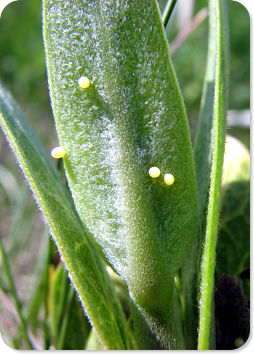
 Joy of gardening enhanced by "infestation" of butterflies.(Published in the Winnipeg Free Press, Aug. 12, 2001) Boy, did I ever get egged: front, back, sides, all over. Funny, it was right after my last column that I really got it. Oh, no, it wasn't a surly crowd of angry readers. It was a flight of butterflies, Monarch butterflies to be precise. And it wasn't me or my house that got egged, it was my garden. My milkweed plants, which I grow for just that purpose, got peppered with Monarch eggs. Yes, this "fly-by egging" was a good thing. Every year around the 1st or 2nd week of June I look forward to getting egged by returning female Monarchs. After wintering in Mexico the Monarchs that left here last fall start breeding their way back. The first to arrive in Manitoba in spring will be the children of those that left here the previous autumn. Over the course of the summer some of their grandchildren or even great-grandchildren will make it to Manitoba. The first report of Monarchs in southern Manitoba this year was from May 28, but the main wave hit Winnipeg on June 11. I was out in a prairie field near the airport that day and saw half a dozen Monarchs flitting about. As I checked the wild milkweed plants I found that most already had an egg or two on them. When I got home that morning there were 3 female Monarchs cruising around my yard. The scent of milkweed draws them in, then they land and taste the plants with their feet to be sure they have found milkweed. By the end of June I had Monarch caterpillars all over the yard, munching my milkweeds. By late July or early August, when our Manitoba born generation will emerge, we could be knee-deep in these big beautiful orange and black butterflies. It's already been a great year on other butterfly fronts. At the end of April we were hit by a major infestation of Red Admirals. If you've seen butterflies with a bright red band across a black forewing, that's them. They were all over birch trees in town, sucking sap for food from any wounds in the branches. Red Admirals don't migrate like Monarchs, they just blow north, breeding as they go and ultimately die off. Their caterpillars feed on stinging nettles; another great plant for the garden, if you're a butterfly fan, or if you happen to be a curmudgeon who doesn't want anybody in your yard. I've been raising some Red Admirals this year and have found Milbert's Tortoiseshell caterpillars and two other kinds of caterpillars on my local nettles patches. I'll have to wait until some of these emerge from chrysalises to find out what species they are. In the last week of June there was an explosion of Alfalfa butterflies. Also known as Orange Sulphurs, so I'll let you guess what colour they are, these butterflies raise their caterpillars on alfalfa and other legumes. I swear I saw more than 300 of these orange and yellow butterflies in a local soccer field one day, flitting between clover flowers and laying eggs on medick plants, a weedy relative of alfalfa. Butterflies have always been an important part of my life, but how I relate to them has changed. When I was a little kid, I used to chase through the fields near Omand's Creek, net in hand, and snag any butterfly I could find, stuff them into a jar with moth balls and wait for them to die. Then I would stick a pin through them, spread their wings out and display them as my butterfly collection. I must admit that I still do some collecting today, to maintain a small teaching display, but what I take from nature now, I do far more reverently than I used to. And now I find that I take far more pleasure in watching new butterflies take wing from my gardens than in acquiring some rare new specimen to stick on a board. I still go for walks in the fields or woods, net in hand, and catch a few butterflies, most of which I enjoy for a moment then release unharmed. I practice, and sometimes I may preach, less consumptive ways of interacting with nature. To paraphrase from the recycling movement, I use less and let more live. Thanks for reading! Got to the: < Previous Column | What's Outdoors Front Page | Next Column >
|
||
|
For more on this topic, here's some articles in NatureNorth.com: Butterflies of Manitoba | Butterfly Gardening | Mourning Cloak Butterfly |
||

| You can help NatureNorth produce more great articles with a secure donation through PayPal. Our Google Adsense ads pay our server costs, but that's about it. To learn more follow this link: Support NatureNorth. Thank-you! | |
Return to the: NatureNorth.com Front Page
Or pick a seasonal issue to visit: